Al Mairaj Dental & Cosmetics (AMDC)DHA Phase 3, Lahore30% OFF with BOP Cards25% OFF with JS Bank Cards25% OFF with Bank AL Habib Cards
Dental fillings · DHA Phase 3, Lahore
Dental Fillings in Lahore | Tooth-Coloured Fillings
Our current price rangeRs. 4,000–12,000
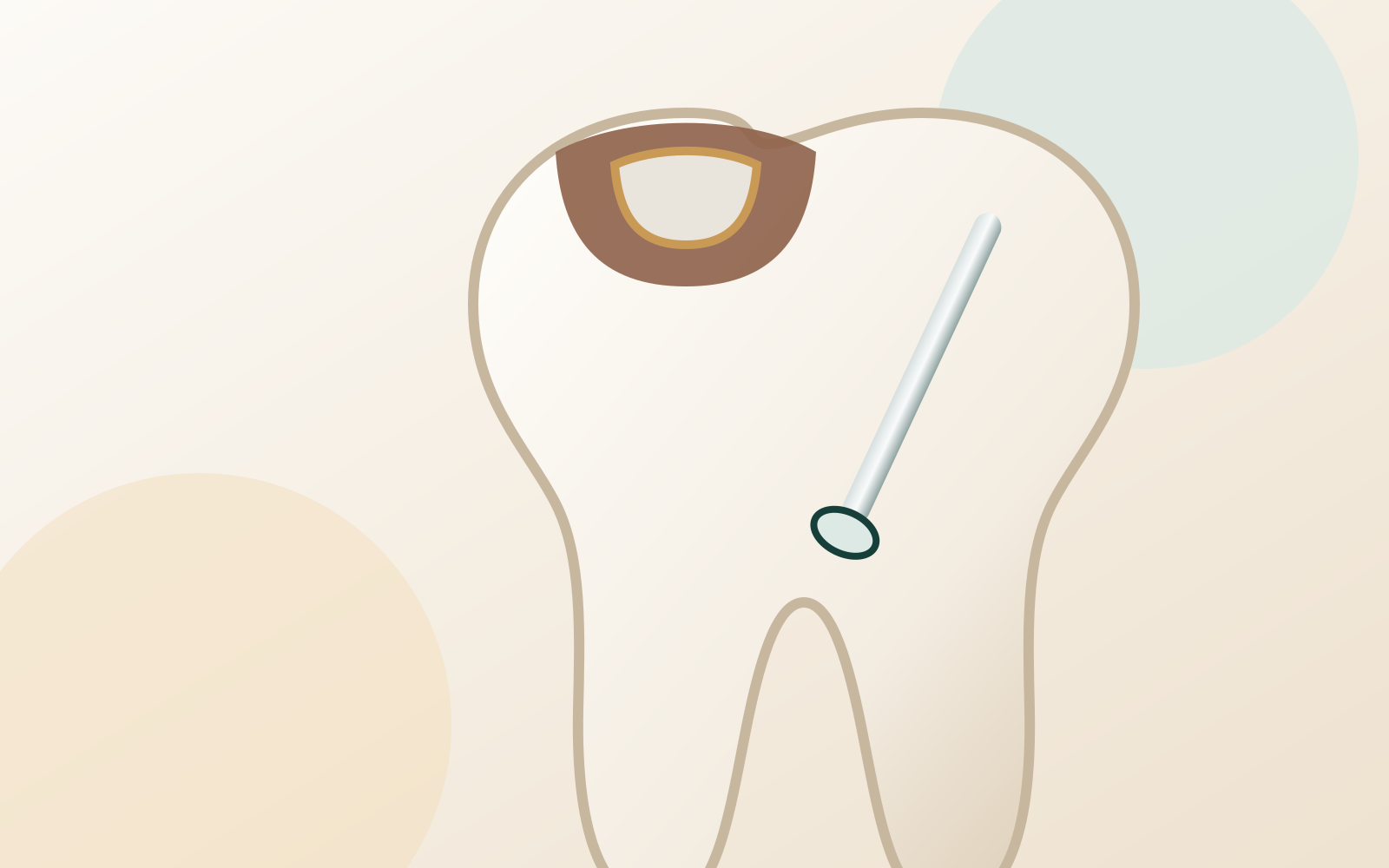
A dental filling repairs a cavity or damaged area after the unhealthy tooth tissue has been removed, then rebuilds the tooth so it can function again. At Al Mairaj Dental & Cosmetics (AMDC) in DHA Lahore, we offer composite, glass ionomer and amalgam filling options. The right material and restoration depend on cavity size, tooth position, bite, moisture control, appearance and whether the tooth nerve is still healthy enough for a filling.
Female dentist14+ years clinical experienceDHA Phase 3 clinic
Cavity depth + tooth structure first
Not every toothache needs a fillingA filling suits some cavities; deeper nerve or structural problems may need another treatment.
Rs. 4k–12kOur current filling range
Tooth-colouredComposite is an aesthetic direct-restoration option
Diagnosis firstFilling vs root canal depends on how deep the problem is
DHA Phase 3331-Z, 1st Floor, Lahore
Direct answers first
Dental Fillings in Lahore: Cost, Types & Treatment
We keep the key answers together so you can understand the treatment clearly before booking.
What is a dental filling?
A dental filling repairs a cavity, small fracture or other localised defect by removing unhealthy tooth tissue and rebuilding the area with a restorative material. It is appropriate when enough healthy tooth remains and the pulp does not require root-canal treatment.
How much do dental fillings cost at AMDC?
Our current dental filling range is Rs. 4,000 to Rs. 12,000. The exact fee depends on the size and location of the cavity and the filling material selected after assessment.
What are tooth-coloured composite fillings?
Composite fillings are resin-based restorations designed to blend with natural tooth colour. They can be used in front or back teeth when clinically suitable and are commonly chosen when appearance matters.
How do I know if I need a filling or a root canal?
A filling treats a defect without removing the pulp; root canal treatment is used when the pulp is irreversibly inflamed, infected or non-vital. Lingering temperature pain, spontaneous/night pain or swelling can point to a deeper problem that needs testing first.
How long do fillings last?
No dental filling lasts forever. Longevity varies with material, cavity size, tooth position, bite forces, grinding, moisture control, oral hygiene and recurrent decay. Regular checks help identify wear or leakage before the tooth breaks.
Does getting a filling hurt?
Local anaesthesia can be used when needed to make the procedure comfortable. Some teeth may feel temporarily sensitive afterwards, but persistent or worsening pain should be reviewed rather than assumed to be normal.
Catch the problem before it becomes deeper
How Do You Know If You Need a Dental Filling?
Cavities can be quiet at first. Other symptoms overlap with cracks, gum problems and pulp inflammation, so the goal is not to “fill every sensitive tooth” — it is to identify the defect and its depth.
01
Visible hole, dark spot or rough area
A cavity can appear as a visible defect, dark area or rough spot, but some decay is hidden between teeth and may need examination or an X-ray to detect.
02
Sensitivity to sweets, cold or hot
Short-lived sensitivity can occur with decay or exposed dentine. Lingering or spontaneous pain needs deeper pulp assessment before a filling is chosen.
03
Food catching or floss repeatedly snagging
A defective contact, cavity, broken edge or failing old restoration can trap food. The cause should be inspected rather than repeatedly ignored.
04
Chipped, worn or previously filled tooth
Small chips and worn areas may sometimes be rebuilt directly. Larger fractures or heavily restored teeth can require an onlay or crown instead of another large filling.
Important: severe spontaneous pain, pain that wakes you at night, prolonged hot/cold pain, facial swelling, a gum pimple or bad taste can suggest a deeper pulp or infection problem. In those situations, the tooth should be assessed for root canal treatment or another appropriate option rather than automatically filled.
Dental filling cost in DHA Lahore
Dental Filling Cost in Lahore
Our current dental filling price range is Rs. 4,000 to Rs. 12,000. We confirm the exact quote after assessment because a small one-surface repair and a larger multi-surface restoration are not the same procedure.
If examination, X-rays, anaesthesia, liners, build-up or another procedure is needed, we will explain it separately before treatment.
Our current price rangeRs. 4,000–12,000
Final cost depends on the size/location of the cavity and the restorative material selected for the tooth.
How many tooth surfaces are involved?A small pit or one-surface cavity generally needs less material and rebuilding than a large multi-surface defect.
Which material is appropriate?Composite, glass ionomer and amalgam have different properties; material choice should match the tooth, cavity and patient priorities.
Is the nerve still healthy enough for a filling?If decay is very deep or the pulp is irreversibly inflamed/infected, a simple filling may not solve the problem.
Material choice should match the tooth
Composite vs Glass Ionomer vs Amalgam Fillings
We offer these three direct restorative materials. The best option depends on cavity size and location, chewing load, moisture control, appearance, cost and the clinical situation — not just which material is newest.
Material
Appearance
Where it may be useful
Important consideration
Composite resin
Tooth-coloured and shade matched
Small-to-moderate restorations in front or back teeth when isolation and bonding are suitable
Technique and moisture control matter; heavy biting or large defects can change the restoration choice.
Glass ionomer
Tooth-coloured but usually less cosmetic than composite
Selected low-stress, cervical/root-surface, paediatric or temporary situations
It releases fluoride but generally has lower wear/fracture resistance than stronger direct restorative materials in heavy-load areas.
Amalgam
Silver/metal coloured
Selected posterior load-bearing restorations where appearance is less important
It is durable but contains mercury and is less aesthetic; material selection should include the patient’s medical situation and preferences.
Indirect onlay / crown
Can be tooth-coloured
When too much tooth is missing for a predictable direct filling
A very large “filling” is not always the most protective option. The remaining cusps and bite may favour an onlay or crown.
Know when a filling is enough
Filling vs Root Canal vs Crown: Which Treatment Is Needed?
A filling is useful when the tooth can be predictably rebuilt directly. But deeper pulp disease, severe loss of tooth structure, fracture or recurrent disease around an old restoration can change the plan.
Important: The right restoration depends on the cavity, remaining healthy tooth structure and condition of the pulp.
Small to moderate cavityOften suited to a direct filling when the pulp and remaining tooth structure are healthy enough.
Deep decay + nerve symptomsMay need pulp testing and possible root canal treatment rather than simply placing a deeper filling.
Large missing cusp or weakened toothMay need an onlay or crown for better fracture protection.
Old filling with recurrent decay or fractureThe restoration should be removed and the remaining tooth reassessed before deciding whether another direct filling is appropriate.
What a dental filling usually involves
How Is a Dental Filling Done?
The exact sequence varies with the material and size of the defect. The steps below describe the usual restorative logic without promising a fixed appointment time or a specific technology that has not been confirmed for your tooth.
01
Examine the tooth & depth of the defect
The dentist checks the tooth, symptoms, existing restorations and bite. Diagnostic imaging may be used when decay depth or hidden surfaces need clarification.
02
Local anaesthesia when needed
The area can be numbed before decay removal, depending on cavity depth, tooth sensitivity and the procedure being performed.
03
Remove unhealthy tooth tissue
Decay and unsupported material are removed while preserving sound tooth structure wherever clinically appropriate.
04
Place, shape & finish the restoration
The selected filling material is placed according to its technique, then shaped to reproduce the tooth’s contour and contact.
05
Check the bite & aftercare
The dentist checks how the tooth meets its opponent and polishes/finishes the restoration as required. A high bite should be adjusted rather than tolerated for days.
Aftercare & maintenance
Dental Filling Aftercare & Sensitivity
A newly restored tooth can feel different for a short time. The main priorities are letting numbness wear off, checking that the bite feels balanced, keeping the area clean and reviewing sensitivity that is persistent or getting worse.
Wait for numbness to wear off
If local anaesthetic was used, avoid chewing until normal sensation returns so you do not accidentally bite your cheek, lip or tongue.
Short-term sensitivity can occur
A tooth can be temporarily sensitive to temperature or biting after a filling. The pattern should generally improve; persistent or worsening symptoms deserve review.
A high bite should be adjusted
If the filled tooth hits first or feels unusually high when you close your teeth, contact us. Repeated heavy contact can keep the tooth sore.
Brush and clean between teeth
Fillings do not make a tooth immune to future decay. Plaque can still collect at restoration margins and on other surfaces.
Watch old fillings over time
Wear, cracks, marginal breakdown or recurrent decay can occur around existing restorations. Regular dental review helps catch these changes earlier.
Grinding changes the risk
Heavy clenching or grinding can increase stress on both natural tooth structure and restorations. Mention it during assessment if you are aware of the habit.
Your dentist at AMDC
Meet Dr. Shadab Haq.
BDS, MDS, C-Ortho, PMDC Verified Dentist, with 14+ years of clinical experience. For dental care, Dr. Shadab Haq provides consultation, diagnosis and treatment planning across AMDC’s core dental services.
BDSMDSC-OrthoPMDC Verified14+ years
Quick dental filling request
Tell us what the tooth is doing.
Use the form to prepare a WhatsApp message for Al Mairaj Dental & Cosmetics (AMDC). We can then confirm a suitable appointment time and advise whether the tooth sounds like a routine filling assessment or needs a deeper tooth-pain review.
Clinic331-Z, 1st Floor, DHA Phase 3, Lahore
HoursMon–Sat, 2:00 PM–9:00 PM
Call+92 321 8403832
Prepare your WhatsApp enquiry
Book on WhatsApp
This form prepares your Dental Fillings request and opens WhatsApp for you to review before sending.
Answers before your visit
Dental Fillings FAQs
These answers are general information. The correct restoration for an individual tooth depends on examination, decay depth, remaining tooth structure and the condition of the pulp.
How much do dental fillings cost at Al Mairaj Dental & Cosmetics (AMDC)?
Our current dental filling range is Rs. 4,000 to Rs. 12,000. The exact quote depends on cavity size and location and the filling material selected after assessment.
What is the difference between a filling and a root canal?
A filling repairs a cavity or defect without treating the root-canal system. Root canal treatment is used when the pulp is irreversibly inflamed, infected or non-vital. Symptoms and diagnostic tests determine which treatment the tooth needs.
Are tooth-coloured composite fillings suitable for back teeth?
Composite can be used in many posterior teeth when the cavity size, remaining tooth structure, bite and moisture control make it a suitable direct restoration. Very large load-bearing defects may be better protected with an indirect restoration.
Which dental filling material is best for my tooth?
The best filling material depends on the tooth and cavity. Composite, glass ionomer and amalgam have different strengths, aesthetics and handling requirements, so the choice is matched to tooth position, biting load and your preferences.
How long does a composite filling last?
Composite fillings can last for years, but no fixed lifespan applies to every restoration. Size, tooth position, bite force, grinding, technique, oral hygiene and recurrent decay all influence longevity.
Why is my tooth sensitive after a filling?
Temporary temperature or biting sensitivity can occur after a restoration, especially when the cavity was deep. If pain is severe, spontaneous, worsening, or the tooth feels high when biting, contact us for review.
Can an old silver or tooth-coloured filling be replaced?
Yes, when replacement is clinically indicated because of recurrent decay, fracture, wear, leakage or another problem. A sound restoration does not automatically need replacement just because it is old or a different colour.
Can I eat after a dental filling?
If local anaesthetic was used, wait until numbness wears off before chewing normally. Follow any material-specific instructions from the dentist and avoid testing the new restoration with unusually hard foods immediately.
When is a filling too large and a crown or onlay better?
If a tooth has lost substantial structure or weakened cusps, a direct filling may not provide enough fracture protection. The dentist may recommend an onlay or crown depending on the remaining tooth and bite.
Can decay come back around a filling?
Yes. New or recurrent decay can develop at restoration margins if plaque control, diet, dry mouth or other risk factors remain. Fillings repair existing damage; they do not make the tooth immune to future cavities.
Ready when you are
Request your appointment without another long form.
Use the WhatsApp form on this page, or the sticky Call and WhatsApp options, to contact AMDC in DHA Phase 3, Lahore.