What are dental veneers?
Veneers are custom-made coverings placed on the front surface of teeth. They are different from crowns, which cover much more of the tooth.

Dental veneers · DHA Phase 3, Lahore
Dental veneers are custom coverings bonded to the front surface of selected teeth to change appearance. They may be considered for chipped, worn, stained, misshapen or gapped teeth when the teeth and gums are healthy enough for cosmetic treatment. At AMDC, Dr. Shadab Haq first checks oral health, bite and whether a more conservative option could meet the same goal.

Quick answers
Choosing veneers is about more than tooth shade. Your enamel, gums, bite, tooth position, grinding habits and the amount of change you want all affect whether veneers are a good option.
Veneers are custom-made coverings placed on the front surface of teeth. They are different from crowns, which cover much more of the tooth.
They may improve the appearance of selected chipped, stained, worn, misshapen or gapped teeth. The underlying cause of the concern still needs to be assessed first.
Many veneer treatments are not reversible because enamel is removed during preparation. The amount of preparation varies by case and veneer type.
No. Active decay, gum disease, structural problems or other dental disease should be treated before elective veneers are placed.
Yes. Veneers can chip, crack, wear or debond and may later need repair or replacement. Clenching, grinding and biting hard objects can increase risk.
We confirm the current quote after assessment because the number of teeth, material, preparation, laboratory work and any dental treatment needed first can change the plan.
Common veneer materials
Porcelain and composite veneers work differently. Which option suits you depends on your teeth, enamel, bite and the result you want.
Custom laboratory-made shells planned for shape, shade, fit and bite. Treatment commonly involves irreversible tooth preparation.
Tooth-coloured resin is bonded and sculpted directly in selected cases. It may be easier to repair but can stain or wear over time.
If the concern is mainly shade or a small chip, a more conservative option may achieve the goal without preparing multiple teeth.
When crowding, spacing or bite is the main problem, moving the teeth may be more appropriate than masking the position with veneers.
Who may be suitable
Veneers can work well for the right concern, but they are not the best answer for every smile. Where possible, healthy tooth structure should be preserved.
Selected front teeth with proportion, contour, chip or wear concerns may be considered after structural assessment.
Veneers may be discussed when discolouration cannot be adequately managed with a more conservative whitening approach.
Decay, gum disease or significant structural problems should be addressed before elective veneer treatment.
Significant bite problems, crowding or heavy clenching may change the treatment plan or make another option more appropriate.
Real AMDC veneer case
This is a real veneer case treated at AMDC. Shade, shape and the number of teeth treated are planned individually, so results vary.
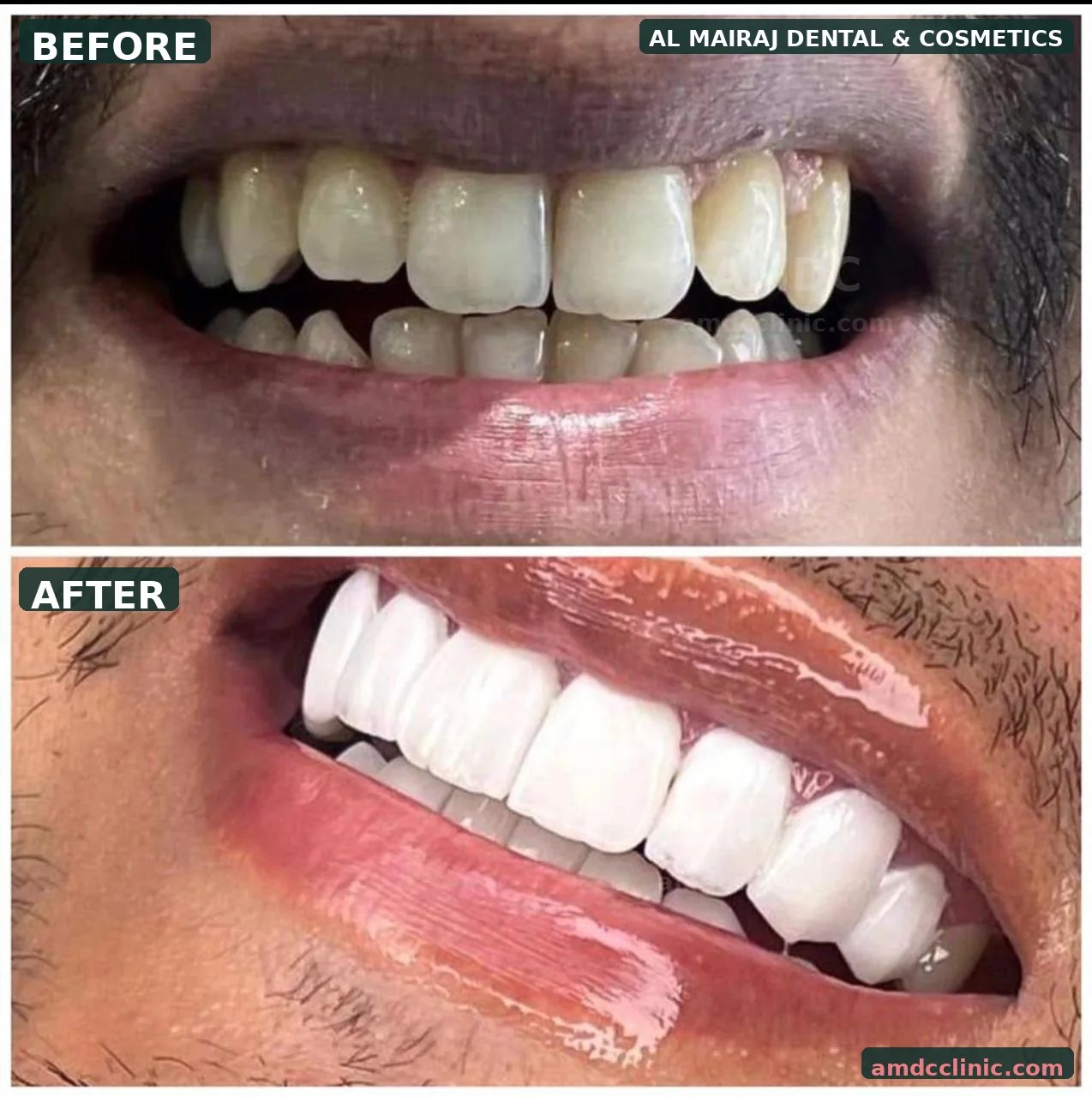
A real AMDC veneer result. Your result will depend on your own teeth, bite and treatment plan.
A short clip from a veneer procedure at AMDC. Suitability is confirmed after an examination.
Veneer process
The steps differ for porcelain and composite veneers, but both start with an examination and treatment plan.
Discuss what bothers you, how many teeth appear in your smile and how subtle or noticeable you want the change to be.
Decay, gums, enamel, tooth position, bite and existing restorations are checked before cosmetic decisions are made.
The dentist discusses tooth shape, shade and whether porcelain, composite or another treatment would suit the case better.
Porcelain cases may require enamel preparation, records and laboratory fabrication. Composite may be bonded and sculpted directly. The exact method is explained before consent.
Margins, bite and appearance are checked. Long-term care still requires brushing, cleaning between teeth and regular dental reviews.
Veneer care
Veneers do not make the underlying tooth immune to decay or gum disease. Long-term care depends on oral hygiene, bite, habits and regular review.
Use fluoride toothpaste and keep the gumline clean around restored teeth.
Daily interdental cleaning remains important for gum health and the margins of restorations.
Do not use veneered teeth to open packaging, bite hard objects or perform habits that increase chipping risk.
Have looseness, chips, sensitivity or a changed bite checked rather than ignored; discuss protection if you clench or grind.

Health before cosmetics
Dr. Shadab Haq is a BDS, MDS, C-Ortho, PMDC Verified Dentist with 14+ years of clinical experience. Veneer planning at AMDC starts with the teeth, gums and bite. If whitening, bonding or orthodontics can solve the concern with less tooth preparation, those options should be discussed first.
Veneer consultation
At the assessment, we can check whether veneers are suitable, how many teeth may need treatment and whether a simpler option could achieve the result you want.
Share only what you are comfortable sharing.
Veneer FAQs
The safest veneer plan depends on tooth health, enamel, gums, bite and your cosmetic goals.
Ask on WhatsAppVeneers can improve the appearance of selected chipped, stained, worn, misshapen or gapped teeth. They should not be used to hide untreated decay or gum disease.
Many veneer treatments involve removal of enamel and therefore are not reversible. Veneers themselves can also chip, wear, loosen or need replacement over time.
Neither is automatically better for every patient. Porcelain and composite differ in preparation, fabrication, repairability, stain resistance, wear and cost. The right material depends on the clinical situation and goal.
The amount of preparation varies. Porcelain veneers commonly require removal of some enamel, while some composite or minimal-preparation approaches can be more conservative. Suitability cannot be decided from photographs alone.
They can change the appearance of selected minor shape or position concerns, but significant crowding or bite problems may be better treated orthodontically rather than removing healthy tooth structure to mask alignment.
Yes. Natural tooth structure remains around and behind the veneer. Brushing, interdental cleaning and dental reviews remain essential.
There is no standard number. It depends on which teeth show when you smile, the teeth that actually need treatment, symmetry, shade and whether untreated neighbouring teeth will blend with the planned result.
AMDC confirms the current quote after assessment. The number of teeth, material, laboratory work, preparation and any treatment needed before veneers all affect the final plan.
Ready when you are
Use the WhatsApp form on this page, or the sticky Call and WhatsApp options, to contact AMDC in DHA Phase 3, Lahore.