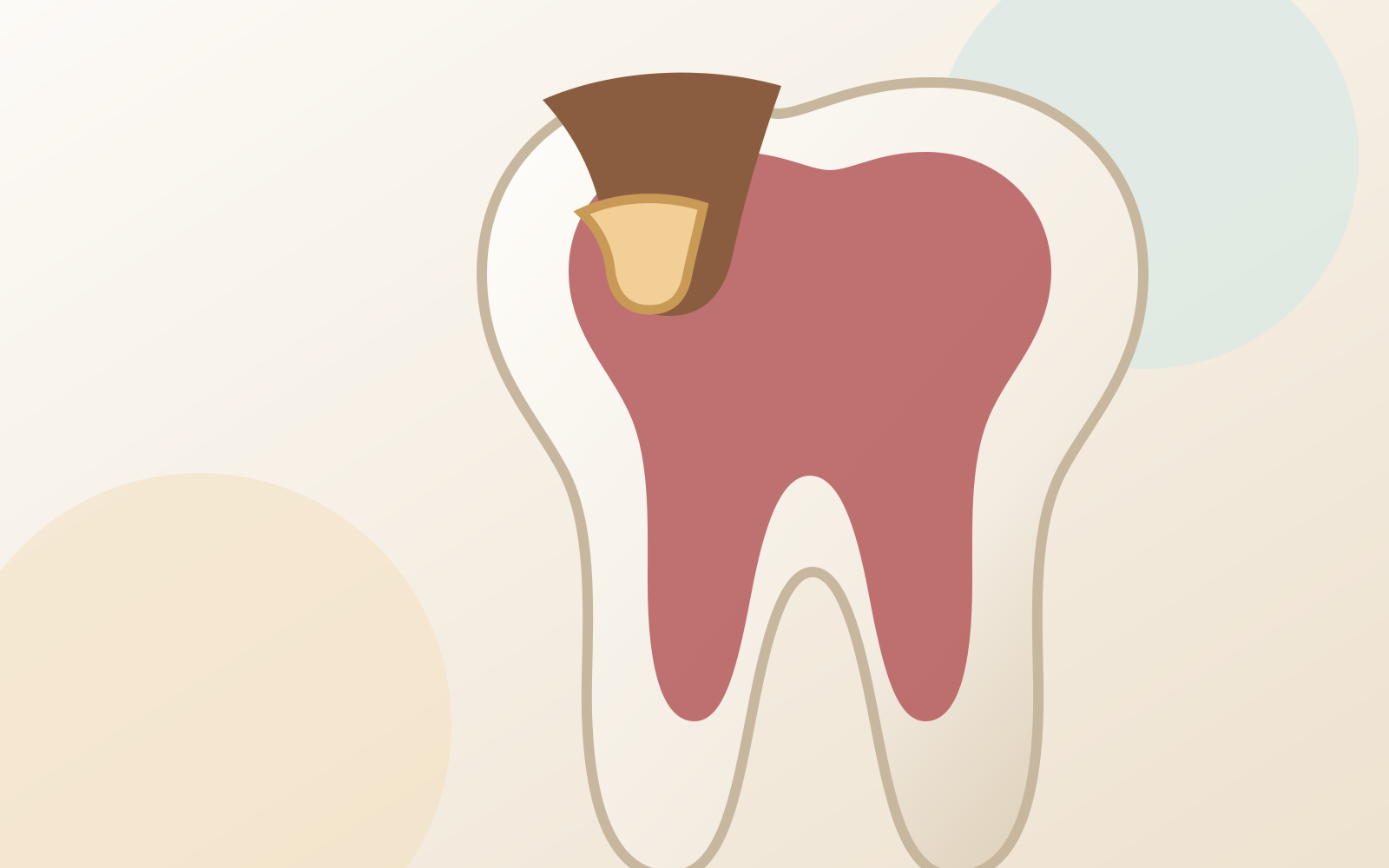
What is pulp capping?
It is a vital-pulp preservation technique used in selected teeth. Depending on the clinical situation, the dentist protects the pulp and seals the tooth with an appropriate restoration.

Pulp capping · tooth preservation · DHA Phase 3, Lahore
Pulp capping is not a guaranteed way to avoid root canal treatment. It is a tooth-preservation approach for selected teeth when the pulp is judged capable of healing. At Al Mairaj Dental & Cosmetics (AMDC) in DHA Lahore, we assess symptoms, decay depth and pulp status before recommending it.

Direct answers first
The key decision is whether the pulp is healthy enough to preserve. A deep cavity alone does not tell us that.
It is a vital-pulp preservation technique used in selected teeth. Depending on the clinical situation, the dentist protects the pulp and seals the tooth with an appropriate restoration.
Sometimes a suitable tooth can remain vital, but there is no guarantee. If pulp inflammation is irreversible or infection/necrosis is present, root canal treatment may be indicated.
We confirm a case-specific quote after assessment. Decay depth, pulp exposure and the required final restoration can change the procedure and overall cost.
Before treatment
Symptoms can overlap between reversible irritation, irreversible inflammation and infection, so the treatment choice should not come from pain alone.
We ask about cold/heat sensitivity, spontaneous pain, biting pain, duration and previous treatment.
The dentist examines the cavity/tooth and may use pulp or percussion tests depending on the case.
Imaging can help assess decay depth, the root area and other causes of symptoms.
Even when the pulp may be preservable, enough tooth structure must remain for a durable final restoration.
Pulp capping vs other treatment
A deep cavity can lead to different treatment paths. We combine symptoms, clinical findings, pulp testing and imaging when indicated before deciding how conservative the treatment can safely be.
Some deep cavities can still be restored without a pulp-capping procedure. The decision depends on how close decay is to the pulp, what happens during decay removal and the pulp diagnosis.
Pulp capping or another vital-pulp approach may be considered for selected teeth whose pulp is judged capable of healing. Technique and material are chosen according to the clinical situation.
If the pulp is irreversibly inflamed, infected or non-vital, preserving it may no longer be the predictable goal. Root canal treatment or another option can then be discussed.
Suitability matters
Pulp capping is deliberately selective. We avoid presenting it as a shortcut to prevent root canal treatment when the pulp diagnosis points to a more advanced problem.
Brief sensitivity can occur with deep decay, but the duration and triggers matter. Symptoms are interpreted together with examination rather than used alone.
Pain that starts without a trigger, wakes you at night or lingers after heat or cold can change the pulpal diagnosis and needs careful assessment.
Swelling, drainage, a gum boil or systemic symptoms can indicate infection and are not situations to treat as a routine pulp-capping enquiry.
Even when the pulp may be preservable, the tooth must still be restorable with a durable seal. Extensive structural loss or cracks can change the prognosis.
After vital-pulp treatment
A protected pulp still needs a well-sealed restoration and monitoring. We explain what symptoms are expected, which changes need review and what the next restorative step is.
The restoration above the pulp-protection material matters because leakage and new decay can compromise the result. Follow any advice about temporary or final restorations.
Mild short-term sensitivity may settle, but increasing spontaneous pain, lingering thermal pain, swelling or biting pain should be reviewed promptly.
Even a carefully selected tooth can later develop pulpal disease. If the diagnosis changes, we explain whether root canal treatment or another option is then appropriate.
Current price guidance
The exact cost depends on the condition of the tooth, whether the pulp is exposed and the restoration required afterwards. We confirm the treatment and quote after examining the tooth.
We confirm a case-specific price after examining the tooth and before treatment begins.
Whether the pulp is exposed, the pulp diagnosis, decay depth and the final restoration can all change treatment.
If pulp capping is not suitable, we explain whether a filling, root canal treatment, crown or extraction needs consideration.
Pulp capping is only suitable for selected teeth. The pulp condition, final seal and follow-up all affect the outcome.
What happens next
The exact procedure depends on whether the pulp is exposed and what the diagnosis shows.
We examine symptoms, decay depth and the tooth’s restorability.
Clinical findings and imaging, when needed, help determine whether vital-pulp preservation is appropriate.
If suitable, the pulp is protected using the clinically appropriate technique and material.
A well-sealed restoration is placed or planned, and we explain warning signs and follow-up.
Related dental care
These related guides can help you understand the options that may become relevant after your dental assessment.

Your dentist at AMDC
BDS, MDS, C-Ortho, PMDC Verified Dentist, with 14+ years of clinical experience. For dental care, Dr. Shadab Haq provides consultation, diagnosis and treatment planning across AMDC’s core dental services.
Book an assessment
You do not need to decide whether you need pulp capping or root canal treatment. We assess the tooth first and explain the appropriate options.
Prepare your WhatsApp enquiry
This form prepares your Pulp Capping request and opens WhatsApp for you to review before sending.
Frequently asked questions
What pulp capping is, when it may be suitable, pricing and when root canal treatment may be needed instead.
Message us on WhatsAppPulp capping is a vital-pulp preservation approach used in selected teeth when the pulp is considered capable of healing. The exact technique depends on whether the pulp is exposed and on the clinical findings.
No. Pulp capping is only suitable for selected teeth. If the pulp is irreversibly inflamed, infected or non-vital, root canal treatment or another option may be more appropriate.
We confirm the pulp-capping price after the tooth is assessed. The depth of decay, whether the pulp is exposed and the final restoration can change the treatment plan.
No. Deep decay can be close to the pulp without the same diagnosis in every tooth. Symptoms, clinical tests and X-rays help determine pulp status.
Severe spontaneous or lingering pain can suggest more advanced pulpal inflammation and needs prompt assessment. Symptoms alone cannot confirm whether pulp capping is suitable; an examination is needed.
The tooth needs a well-sealed restoration and follow-up. We may recommend review if symptoms persist, worsen or if the tooth needs further treatment.
Ready when you are
Use the WhatsApp form on this page, or the sticky Call and WhatsApp options, to contact AMDC in DHA Phase 3, Lahore.