Al Mairaj Dental & Cosmetics (AMDC)DHA Phase 3, Lahore30% OFF with BOP Cards25% OFF with JS Bank Cards25% OFF with Bank AL Habib Cards
Al Mairaj Dental & Cosmetics (AMDC)

Tooth extraction · DHA Lahore

Tooth extraction in DHA Lahore — when a tooth cannot be predictably saved.

Our current price rangeRs. 5,000–40,000

Removing a tooth should not be the automatic first choice when it can still be restored. At Al Mairaj Dental & Cosmetics (AMDC), extraction assessment starts by checking whether the tooth can reasonably be saved with a filling, root canal treatment, crown or another option. When removal is the safer or more predictable route, the approach depends on whether the tooth is fully erupted, broken, impacted or surgically complex.

Female dentist14+ years clinical experienceDHA Phase 3 clinic
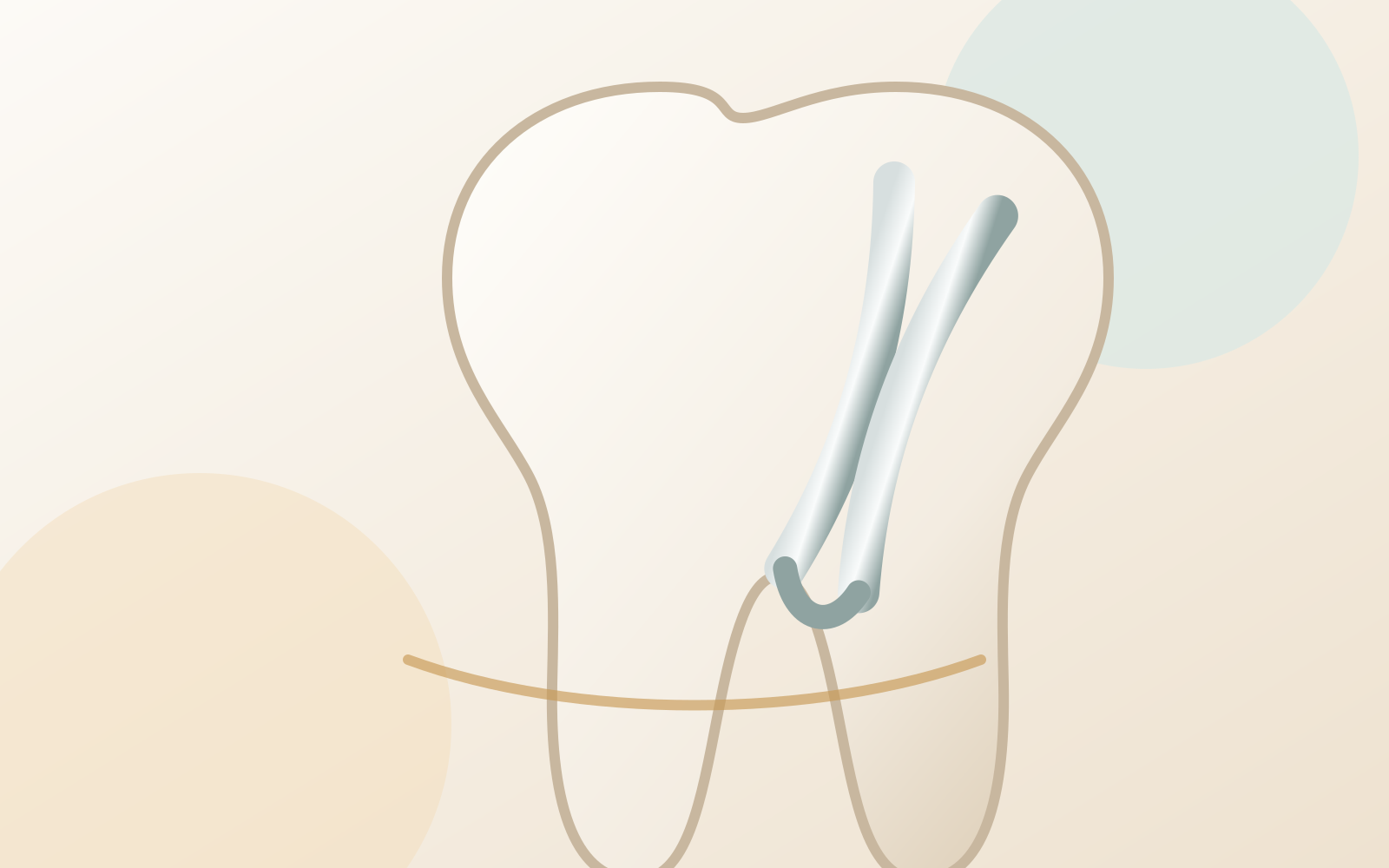
Tooth extraction assessment visual at Al Mairaj Dental & Cosmetics (AMDC) in DHA Lahore
Save-first assessment
Extraction is not always the first optionWe assess the tooth and roots before deciding the safest treatment approach.
Rs. 5k–40kOur current extraction range
Save firstCheck realistic tooth-saving options before removal
Simple / surgicalComplexity depends on eruption, roots and surrounding structures
DHA Phase 3331-Z, 1st Floor, Lahore

Direct answers first

Tooth extraction questions, answered clearly.

Before an extraction, you should understand not only how a tooth is removed, but when it may be saved, when a wisdom tooth can be monitored, how surgical cases differ and how to protect the blood clot afterwards.

When does a tooth need extraction?

Extraction may be recommended when a tooth is too damaged, decayed, fractured, loose, infected or poorly positioned to keep predictably. Orthodontic treatment and problematic impacted wisdom teeth can also be reasons for removal. The tooth should still be assessed for realistic saving options first when appropriate.


How much does tooth extraction cost at AMDC?

Our current tooth-extraction range is Rs. 5,000 to Rs. 40,000. Simple erupted teeth are generally at the lower end, while surgical or impacted teeth such as difficult wisdom teeth can cost more because the procedure is more complex.

What is the difference between simple and surgical extraction?

A simple extraction removes a tooth that can usually be accessed and loosened directly; a surgical extraction may require a gum opening, removal of some surrounding bone or sectioning the tooth. Imaging and examination help determine which approach is needed.

Do all wisdom teeth need to be removed?

No. A healthy wisdom tooth that is not causing disease or repeated problems can often be monitored. Removal is more likely when there is pain, repeated gum infection, decay, damage to the neighbouring tooth, cystic change or another clear clinical reason.

Does extraction hurt?

Local anaesthetic is used to numb the area for many extractions. Pressure and movement can still be felt even when sharp pain is blocked. If you feel sharp pain during the procedure, tell the dentist so anaesthesia can be reassessed.

What is dry socket?

Dry socket is a painful healing complication in which the protective blood clot is lost or breaks down too early. Increasing pain, bad taste or bad breath a few days after extraction should be reviewed rather than simply waited out.

Before deciding to remove the tooth

Can the tooth be saved instead?

A natural tooth is worth preserving when it can be restored predictably. Extraction is appropriate when prognosis is poor, the tooth is non-restorable, it is causing repeated disease, or another treatment plan genuinely requires removal.

01

Small or moderate decay

If enough sound tooth remains and the pulp is healthy enough, a dental filling may repair the defect without removing the tooth.

02

Deep decay or pulp infection

A tooth with an inflamed or infected pulp may sometimes be saved with root canal treatment followed by an appropriate restoration.

03

Large structural loss

If a tooth can still be rebuilt but is too weak for a direct filling, a crown or other protective restoration may be considered.

04

Non-restorable fracture, severe support loss or repeated disease

When the remaining tooth or surrounding support cannot provide a predictable long-term foundation, extraction may be the more appropriate option.

Important: severe facial swelling, difficulty swallowing or breathing, fever, spreading swelling or feeling systemically unwell can indicate a dental infection that needs urgent assessment. Do not rely on antibiotics alone to “settle” a tooth indefinitely.

Tooth extraction price in DHA Lahore

Our current range is Rs. 5,000–40,000.

The range is wide because a fully erupted loose tooth and a deeply impacted wisdom tooth are not comparable procedures. We confirm your personalised quote after examining the tooth and reviewing any imaging that is clinically needed.

The exact treatment can differ between cases, so imaging, medication, surgical steps and specialist involvement are discussed according to your individual needs.

Our current price rangeRs. 5,000–40,000

Simple extractions are generally less complex; surgical or impacted-tooth cases can sit higher in the range.

Is the tooth fully erupted?A tooth that is easily accessible may be removed more simply than one buried under gum or bone.
Root shape and fracture riskCurved, divergent, brittle or previously treated roots can make removal more technically involved.
Is surgery required?Some teeth require a gum flap, bone removal, sectioning or stitches rather than direct loosening and removal.
Wisdom-tooth anatomyImpaction depth, position and proximity to important structures can affect imaging, difficulty and whether referral or specialist input is appropriate.

Simple, surgical & wisdom-tooth removal

Not every extraction follows the same route.

The terms below describe different levels of access and complexity. They are useful for understanding the treatment plan, but the final category is based on examination and imaging rather than the tooth name alone.

TypeTypical situationWhat may be involvedPlanning point
Simple extractionFully erupted tooth that can be accessed directlyLocal anaesthetic, loosening and removal with appropriate dental instrumentsThe condition of the crown and roots still affects difficulty.
Surgical extractionBroken, buried, difficult-rooted or otherwise inaccessible toothMay require a gum opening, limited bone removal, tooth sectioning and/or suturesSurgical complexity changes recovery, cost and risk discussion.
Wisdom tooth extractionThird molar causing disease or repeated symptomsCan be simple if erupted, or surgical if partly/fully impactedHealthy symptom-free wisdom teeth do not automatically need removal.
Orthodontic extractionSelected teeth removed as part of a planned orthodontic strategyUsually coordinated with the orthodontic planThe reason for removal should be connected to the overall braces/aligner treatment plan.

Wisdom teeth need diagnosis, not routine removal

An impacted wisdom tooth can be monitored — or removed when it is causing disease.

Wisdom teeth can remain partly or fully buried, erupt at an angle or become difficult to clean. Repeated pericoronitis, decay, gum disease, damage to the tooth in front, cystic change or persistent symptoms can support removal. If the tooth is healthy and not causing a problem, monitoring can be appropriate.

Important: We recommend extraction only when removal is appropriate after examining the tooth and considering tooth-saving options where relevant.
Partially erupted wisdom toothFood and bacteria can collect under a gum flap and contribute to repeated inflammation or infection.
Decay in the wisdom tooth or neighbourAccess can be difficult, and the tooth in front can sometimes be damaged by the position of the wisdom tooth.
Lower wisdom tooth near a nerveImaging helps assess anatomy. Complex proximity may change the surgical plan or prompt specialist referral.
No symptoms and no diseaseRoutine removal is not automatically necessary. Ongoing dental monitoring can be the appropriate plan.

What happens during extraction planning

Assessment, anaesthesia, removal and clot protection.

The exact procedure changes with the tooth. The steps below describe the usual pathway. Your exact treatment time, surgical technique and anaesthesia plan are confirmed after assessment.

01

Examine the tooth and discuss alternatives

The dentist assesses restorability, gum support, symptoms and the reason for removal. Imaging may be used to assess roots, impaction or nearby anatomy when clinically indicated.

02

Numb the area

Local anaesthetic is commonly used so the tissues are numb. Pressure and movement can still be felt even when sharp pain is controlled.

03

Remove the tooth using the appropriate approach

A straightforward tooth may be loosened and removed directly. A surgical tooth may require access through the gum, removal of some bone, sectioning or sutures.

04

Control bleeding and protect the socket

A blood clot forms in the socket and is important for normal healing. Gauze pressure and the dentist’s aftercare instructions help protect the site.

05

Plan review or tooth replacement where relevant

A removed wisdom tooth usually does not need replacement. Other missing teeth may need a later discussion about dental implants, a bridge or another replacement option depending on the case.

Protect the blood clot

After tooth extraction: what helps normal healing?

Your dentist’s instructions take priority because surgical difficulty, medications and medical history vary. The general goal in the first phase is to control bleeding and avoid disrupting the blood clot that protects the socket.

Bite on gauze as instructed

A small amount of oozing can be normal. Use the pressure instructions provided by the dentist rather than repeatedly removing the gauze to inspect the site.

Do not rinse or spit vigorously early on

Aggressive rinsing or spitting can disturb the developing clot. Follow the timing and mouth-rinse instructions given for your extraction.

Avoid straws in the first day

Suction can disturb the socket. Drink gently from a cup and choose foods that do not require hard chewing around the extraction site.

Avoid smoking and vaping during early healing

Smoking or vaping can impair blood flow and is associated with a higher risk of healing problems such as dry socket.

Expect some soreness or swelling

Discomfort and swelling can occur after extraction, especially after surgical removal. Symptoms should follow the expected pattern explained by the dentist rather than progressively worsening.

Call if pain gets significantly worse after a few days

Increasing pain, foul taste, bad breath, persistent bleeding, fever or spreading swelling should be reviewed. Dry socket commonly presents with worsening pain after the initial period.

Dr. Shadab Haq at Al Mairaj Dental & Cosmetics (AMDC) in DHA Lahore
Dr. Shadab Haq, PMDC-verified dentist at Al Mairaj Dental & Cosmetics (AMDC)

Your dentist at AMDC

Meet Dr. Shadab Haq.

BDS, MDS, C-Ortho, PMDC Verified Dentist, with 14+ years of clinical experience. For dental care, Dr. Shadab Haq provides consultation, diagnosis and treatment planning across AMDC’s core dental services.

BDSMDSC-OrthoPMDC Verified14+ years

Quick tooth-removal request

Tell us what is happening with the tooth.

Use the form to prepare a WhatsApp message for Al Mairaj Dental & Cosmetics (AMDC). You do not need to decide yourself whether the tooth needs a simple extraction, surgery, wisdom-tooth removal or a tooth-saving treatment.

Clinic331-Z, 1st Floor, DHA Phase 3, Lahore
HoursMon–Sat, 2:00 PM–9:00 PM
Call+92 321 8403832

Prepare your WhatsApp enquiry

Book on WhatsApp

This form prepares your Tooth Extraction request and opens WhatsApp for you to review before sending.

Prepare your WhatsApp enquiry

Book on WhatsApp

This form prepares your appointment request and opens WhatsApp for you to review before sending.

Your details prepare a WhatsApp message; we confirm the appointment after receiving your request.

Answers before your extraction consultation

Common tooth extraction questions.

These answers are general information. Extraction difficulty and aftercare can change with tooth position, medical history, medications, smoking, surgical complexity and the type of anaesthesia used.

Message us on WhatsApp
How much does tooth extraction cost at Al Mairaj Dental & Cosmetics (AMDC)?

Our current range is Rs. 5,000 to Rs. 40,000. A simple extraction is generally less complex, while surgical or impacted-tooth removal such as a difficult wisdom tooth can cost more. The exact quote is confirmed after assessment.

Should I choose root canal treatment or extraction?

If the tooth can be predictably saved, preserving the natural tooth is generally worth considering. Root canal treatment treats an inflamed or infected pulp while retaining the tooth. Extraction is appropriate when the tooth is non-restorable, prognosis is poor, or another clear treatment reason makes removal preferable.

Do all impacted wisdom teeth need surgery?

No. Some impacted wisdom teeth are monitored if they are healthy and not causing disease. If removal is required, the tooth may be straightforward or surgical depending on its eruption, position, roots and surrounding anatomy.

Will I feel pain during tooth extraction?

Local anaesthetic is commonly used to numb the area. You may still feel pressure, pushing or movement. Sharp pain should be reported during the procedure so the dentist can reassess anaesthesia.

How long does tooth-extraction recovery take?

Recovery varies. Simple extractions often settle faster than surgical or impacted-wisdom procedures, while the socket and underlying bone continue healing for longer than the first few comfortable days. Follow the personalised aftercare instructions you are given.

What can I eat after extraction?

Choose soft foods that do not require forceful chewing around the extraction site, stay hydrated, and avoid disturbing the socket. Your dentist can advise when to return to your normal diet based on the procedure.

Can I smoke after a tooth extraction?

Smoking and vaping can interfere with healing and increase the risk of dry socket. Avoid them during early healing and follow the dentist’s specific advice for your procedure.

Do I need antibiotics after an extraction?

Not automatically. Antibiotics are not required for every dental pain, infection or extraction. They are prescribed when the dentist identifies a clinical indication, such as certain spreading or systemic infections or other patient-specific reasons.

Can I drive home after tooth removal?

It depends on the anaesthesia and medicines used. If only local anaesthetic is used and you feel well, driving may be possible; if sedation or impairing medication is used, arrange a responsible companion and follow our instructions.

Do I need to replace an extracted tooth?

Wisdom teeth usually do not need replacement. For other functional teeth, leaving a gap can affect chewing, tooth position and the bite, so discuss whether a dental implant, bridge or another replacement option is suitable.

When should I call after an extraction?

Contact us if bleeding does not settle with the advised pressure, pain is becoming significantly worse after a few days, you develop a foul taste or bad breath with severe socket pain, fever, pus, spreading swelling, or any symptom that concerns you.

Tooth Extraction · DHA Phase 3

A painful or badly damaged tooth should be assessed before deciding on extraction.

Tell us about the pain, swelling, wisdom tooth or damaged tooth and any recent dental treatment. We’ll first assess whether the tooth can be saved.

CallWhatsApp