What is a full denture?
A complete denture replaces all teeth in an upper or lower arch. It rests on the gums and underlying ridge and is shaped to restore teeth, bite and facial support.

Full dentures · DHA Phase 3, Lahore
Full or complete dentures replace all missing teeth in an upper arch, a lower arch, or both. At Al Mairaj Dental & Cosmetics (AMDC) in DHA Phase 3, Lahore, the plan starts with your gums, jaw ridges, bite, facial support, speech and chewing needs. If teeth still need removal, healing and timing are considered before the final denture plan is confirmed.
Direct answers first
The main questions are usually whether a full denture will stay in place, how long it takes to adapt, whether eating and speaking improve, and what happens if the mouth changes after extractions.
A complete denture replaces all teeth in an upper or lower arch. It rests on the gums and underlying ridge and is shaped to restore teeth, bite and facial support.
We confirm the current total after examination. Cost can vary depending on whether you need an upper denture, a lower denture or both, the lab work required, healing after extractions and whether any other dental treatment is needed first.
Eating usually requires an adaptation period. Softer foods, smaller bites and chewing on both sides can help while you learn the new bite. Persistent instability or pain should be reviewed rather than accepted as normal.
Speech can sound different at first. The tongue and lips need time to adapt to the new tooth position and denture borders. Ongoing clicking, looseness or difficulty should be checked.
Usually they should be removed at night unless your dentist advises otherwise. This gives oral tissues a rest and allows the denture and mouth to be cleaned.
Yes. Gums and jaw ridges change over time, particularly after extractions. A denture may later need adjustment, a reline, repair or replacement depending on the cause.
Who may need complete dentures
Complete dentures are one of several ways to restore an arch when all natural teeth are already missing or when the remaining teeth cannot predictably be maintained. The final decision follows examination and discussion of alternatives.
A complete denture can restore an upper arch, lower arch or both when no natural teeth remain in that arch.
If teeth are severely compromised, the dentist first determines whether they can be saved and discusses extraction timing, healing and replacement planning.
Traditional complete dentures do not require implant surgery. They rely on the oral tissues, ridge form, saliva, muscle control and accurate fit.
A denture that rocks, drops, repeatedly causes ulcers, looks worn or changes the bite should be assessed for adjustment, reline, repair or replacement.
Full denture cost in Lahore
We confirm the price after an examination. The total depends on whether you need an upper denture, a lower denture or both, the records and lab work required, and whether any treatment is needed before the denture is made.
Real AMDC patient result
This video shows a real full-denture case treated at AMDC. Fit, comfort, speech and chewing can feel different for every patient.
Complete denture process
The exact sequence depends on whether teeth are already missing, whether extractions are required and how the tissues are healing. More than one clinical and laboratory stage is usually needed.
The dentist checks the gums, jaw ridges, any remaining teeth, bite, jaw relationship, oral tissues and your previous denture history.
Accurate records are taken so the denture base can be designed around the shape of the mouth. Additional jaw and bite records may be needed.
Vertical height, jaw relation, tooth position, smile support and shade are considered rather than choosing teeth in isolation.
A trial stage may be used to check tooth position, appearance and bite before the denture is finished, depending on your treatment plan.
The finished denture is checked for seating, pressure areas and bite. New dentures can require follow-up adjustments as the mouth adapts.
Living with complete dentures
Good denture care includes both the appliance and the tissues underneath it. A denture can look clean but still cause problems if plaque, pressure areas or fit changes are ignored.
Remove food debris and biofilm every day. Use a non-abrasive cleaning method recommended for the denture material and rinse thoroughly before reinserting it.
Brush the gums, tongue and any remaining natural teeth. If natural teeth remain in the opposite arch, they still require fluoride toothpaste and regular dental care.
Unless specifically advised otherwise, overnight removal allows the tissues to rest and supports cleaning and safe storage.
Begin with manageable textures and smaller pieces. Learning to control a complete denture is different from chewing with natural teeth.
Do not file a denture or use household repair materials. Recurrent ulcers, pressure or instability should be checked professionally.
Jaw ridges can remodel and shrink over time. A denture that once fitted well can later need adjustment, reline or replacement.
Compare replacement options
Traditional full dentures are removable and rest on oral tissues. Implant-based full-arch treatment uses implants in the jaw to support a fixed or implant-retained restoration. Surgery, bone, health, cost and maintenance requirements differ.

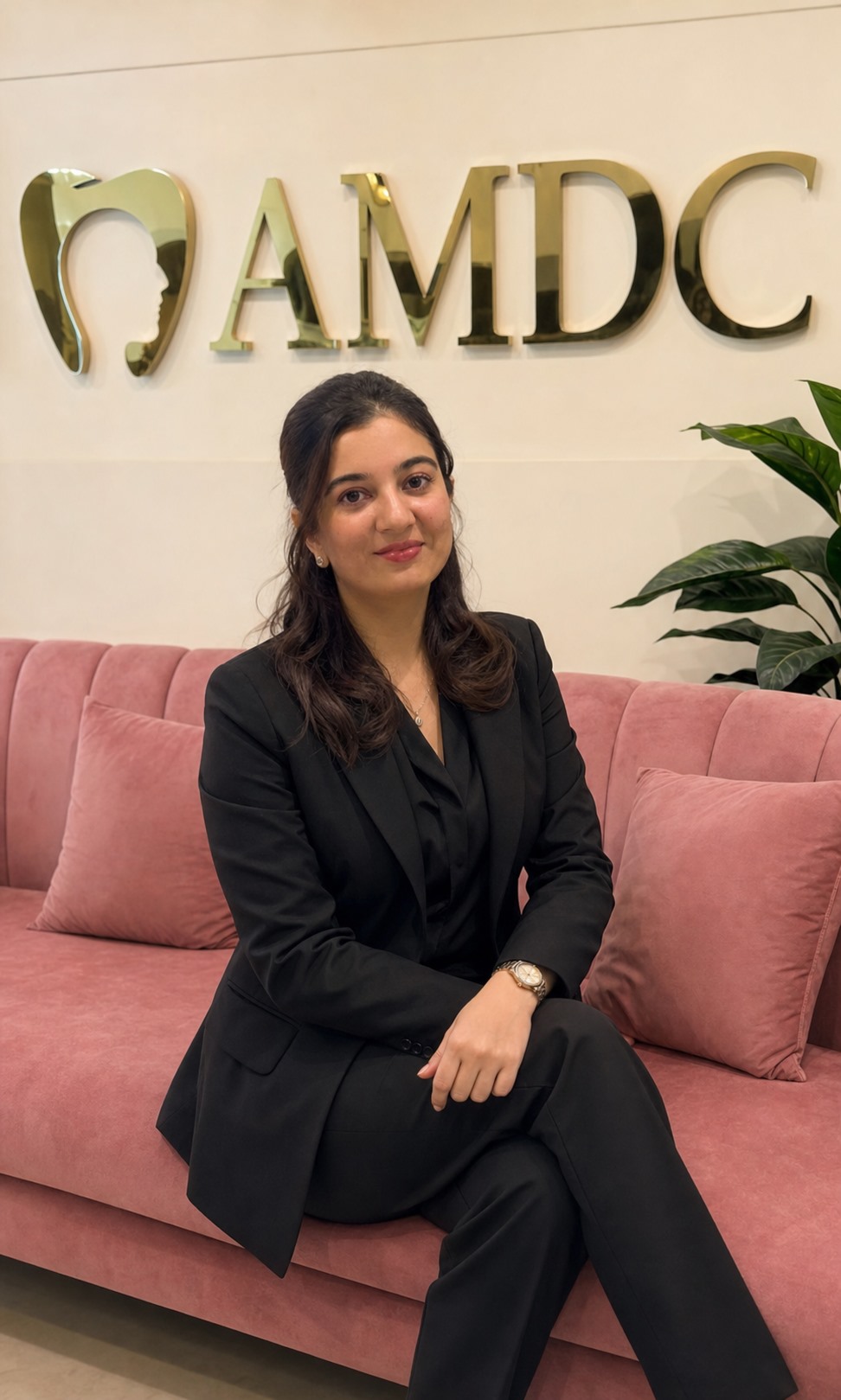
Your dentist at AMDC
BDS, MDS, C-Ortho, PMDC Verified Dentist, with 14+ years of clinical experience. Complete denture planning starts with diagnosis, oral-tissue health, jaw relationship, bite and realistic expectations about adaptation and maintenance.
Request a complete denture assessment
You do not need to know the exact denture type before you contact us. Tell us whether teeth are already missing, whether extractions were recent, and whether you currently wear a denture.
Prepare your WhatsApp enquiry
This form prepares your Full Dentures request and opens WhatsApp for you to review before sending.
Full denture FAQs
General guidance cannot determine your fit or treatment plan. The mouth, jaw ridges and healing stage need to be assessed directly.
Ask on WhatsAppA full or complete denture replaces all teeth in an upper or lower arch. A partial denture replaces one or more missing teeth while some natural teeth remain. See AMDC's Partial Dentures guide.
There is no fixed adaptation time. New dentures can initially feel bulky and can affect eating and speech. Control usually improves with practice, but persistent pain, ulcers, looseness or clicking should be assessed.
Tooth position, shade, shape, lip support and the relationship between the upper and lower teeth can all influence appearance. The goal is a balanced result suited to the individual rather than one standard tooth shape or shade.
Usually dentures should be removed at night unless your dentist specifically advises otherwise. Night-time removal helps oral tissues rest and gives time for cleaning.
Remove and clean them daily with a non-abrasive denture-cleaning method suitable for the material. Also clean the tongue, gums and any remaining natural teeth. Avoid abrasive toothpaste on the denture unless your dentist or manufacturer specifically recommends it.
Jaw ridges and gums can change over time. Wear of the denture, changes in bite and tissue remodeling can reduce stability. The solution may be adjustment, reline, repair or replacement depending on the cause.
Immediate dentures can be used in selected cases, but the mouth changes substantially during healing and later adjustment, reline or replacement may be needed. The timing must be planned clinically.
They are different treatment options. Traditional dentures are removable and avoid implant surgery; implant-based options require surgical and restorative planning and may provide greater support for suitable patients. The better option depends on your health, bone, goals, maintenance needs and budget.
Ready when you are
Use the WhatsApp form on this page, or the sticky Call and WhatsApp options, to contact AMDC in DHA Phase 3, Lahore.