
Missing-tooth comparison guide · Lahore
Dental Implant vs Bridge vs Denture in Lahore: Tooth Replacement Options Compared
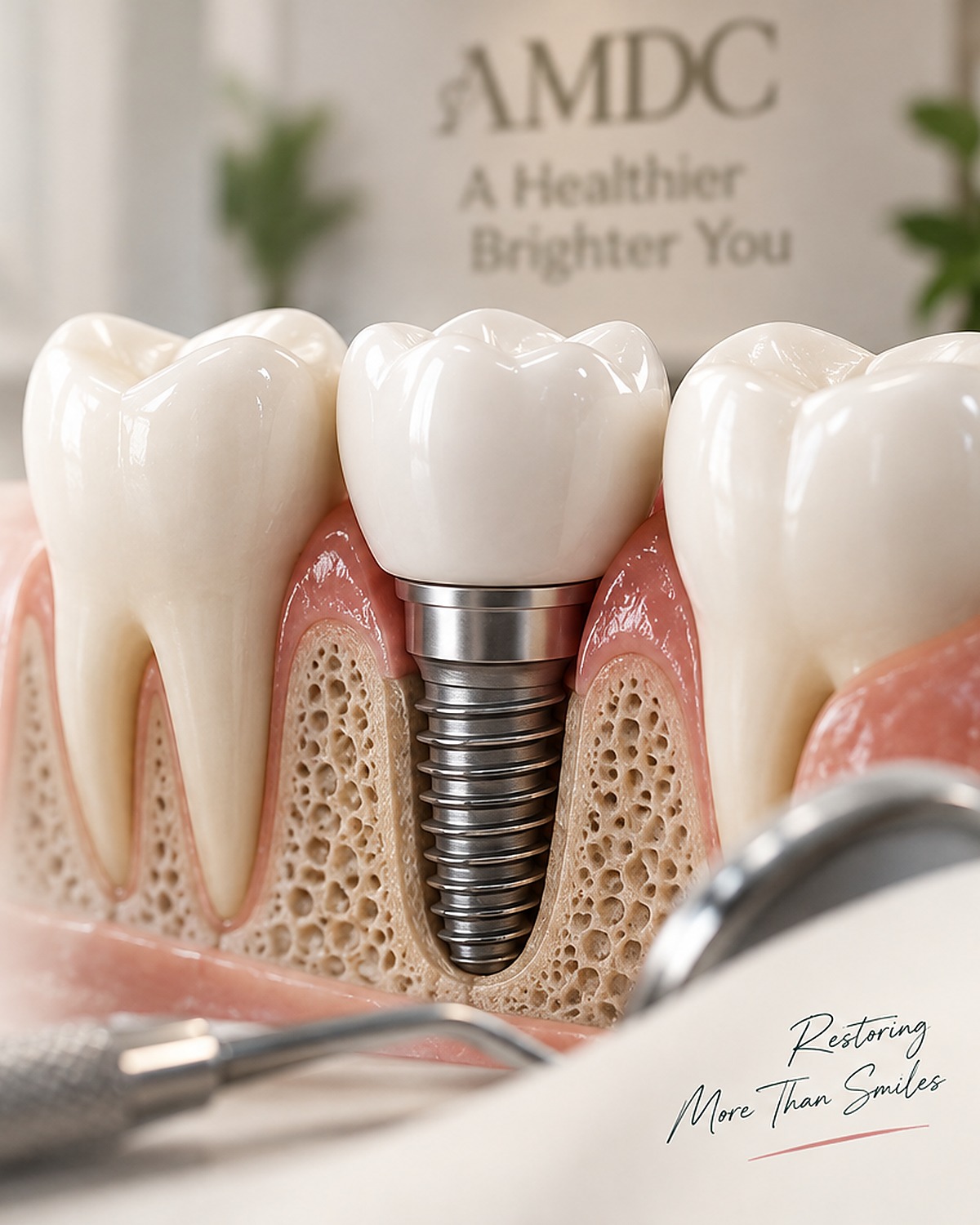
The right tooth-replacement option depends on your oral health, remaining teeth, bone, treatment goals, budget and whether you prefer a fixed or removable solution. A dental implant is supported in the jawbone, a conventional bridge is usually supported by neighbouring teeth, and a conventional partial denture is removable. The better fit for your case depends on what is missing, the condition of the remaining teeth and gums, available bone, treatment time, maintenance needs, budget and your clinical assessment.
Quick answer
Dental Implant vs Bridge vs Denture: Key Differences
That single distinction explains many of the differences in treatment, maintenance and suitability. Your dentist still needs to assess the actual gap, neighbouring teeth, gums, bite and available bone before recommending a plan.
Side-by-side comparison
Which Is Better: Dental Implant, Bridge or Denture?
This table is a simplified patient guide, not a diagnosis. The exact design of an implant restoration, bridge or denture can vary considerably from one case to another.
| Consideration | Dental implant | Traditional bridge | Conventional partial denture |
|---|---|---|---|
| Main support | Implant placed in the jawbone supports the restoration | Usually neighbouring teeth support the bridge | Remaining teeth and oral tissues support a removable appliance |
| Fixed or removable? | Usually fixed for a single implant crown | Fixed | Usually removable by the patient |
| Neighbouring teeth | A single implant generally does not require adjacent healthy teeth to be prepared as bridge supports | Supporting teeth commonly need preparation for a conventional bridge | Design may use remaining teeth for retention without preparing them in the same way as a conventional fixed bridge |
| Surgery | Implant placement is a surgical procedure | No implant surgery for a conventional tooth-supported bridge | No implant surgery for a conventional removable denture |
| Bone assessment | Available bone is important for implant planning | Bone is not used to anchor a conventional tooth-supported bridge | A conventional denture rests partly on oral tissues rather than replacing the tooth root |
| Treatment time | Often includes a healing period before the final restoration | Often shorter than implant treatment, depending on the case | Depends on impressions, design, fabrication, fitting and any treatment needed first |
| Cleaning | Daily cleaning around the implant and restoration is required | Cleaning under and around the bridge is important | The denture is removed for cleaning and remaining teeth also need daily care |
| Common use | One tooth, several teeth or full-arch plans depending on design | One or more missing teeth when suitable support is available | One or several missing teeth, including gaps in different parts of the arch |
If one tooth is missing
Dental Implant vs Bridge: What Happens to Neighbouring Teeth?
For a single gap, the choice is not simply “fixed versus removable.” The health of the neighbouring teeth, available bone, bite and overall treatment goals all matter.
A one-tooth solution supported in bone.
A single implant can support a crown without using adjacent healthy teeth as conventional bridge supports. Implant suitability depends on the site, bone, gums, healing factors and clinical planning. View Dental Implants in DHA Lahore.
A fixed replacement supported by neighbouring teeth.
A conventional bridge can replace the missing tooth using suitable teeth beside the gap as supports. The condition of those supporting teeth and the planned restorative material affect the treatment. View Crowns & Bridges.
A removable option that can also replace other missing teeth.
A partial denture may be considered when a removable option is appropriate, particularly when there are multiple gaps or when other clinical or practical factors influence treatment. View Partial Dentures.
If several teeth are missing
Which Option Is Best for Several Missing Teeth?
Three missing teeth in one continuous span are a different restorative problem from three teeth missing in separate areas. That is why the same option is not automatically used for every patient with the same number of missing teeth.
Implant-supported options
Implants can support individual crowns, bridge-style restorations or full-arch solutions depending on the number and position of missing teeth.
Tooth-supported bridge
A conventional bridge may replace a limited span when suitable supporting teeth are available and the restorative plan is appropriate.
Partial denture
A removable partial denture can replace several teeth, including teeth missing in different parts of the dental arch.
Existing tooth condition
Healthy neighbouring teeth, heavily restored teeth, gum condition and remaining tooth support all influence the plan.
Bone and anatomy
Implant planning requires assessment of the proposed implant sites, while conventional bridges and dentures rely on different forms of support.
Long-term maintenance
Every option needs maintenance, but the cleaning method and professional follow-up differ between fixed implant restorations, bridges and removable dentures.
What treatment involves
How Long Does Each Tooth-Replacement Option Take?
The treatment sequence depends on the option and your oral health before replacement begins. Existing decay, gum disease, extractions or other dental problems may need to be addressed first.
Assessment, implant placement, healing and restoration.
Implant treatment generally involves planning and surgical placement followed by a healing phase before the final restoration is completed. The exact sequence varies by case.
Assess the supporting teeth, prepare the restoration and fit the bridge.
For a conventional bridge, the supporting teeth are assessed and prepared according to the bridge design before the final restoration is fabricated and fitted.
Assessment, impressions, design, fitting and adjustment.
A partial denture is planned around the remaining teeth and tissues. Fit and comfort may need review and adjustment after delivery.
Cost considerations
Dental Implant vs Bridge vs Denture Cost
The amount of treatment, restorative design, number of units, materials and additional procedures can change the final quote. Compare the complete plan rather than assuming one headline number represents the same amount of treatment.
Before you choose
How to Choose Between an Implant, Bridge and Denture
These questions help turn a generic procedure comparison into a decision based on your own mouth and treatment goals.
Which teeth or tissues will support the replacement?
Ask whether the plan relies on jawbone support, neighbouring teeth, oral tissues or a combination.
Will healthy neighbouring teeth need treatment?
This is particularly relevant when comparing a single implant with a conventional tooth-supported bridge.
Is surgery part of the plan?
Implant placement involves surgery; conventional tooth-supported bridges and conventional removable dentures do not require implant surgery.
How long is the complete treatment timeline?
Ask about treatment before replacement, healing stages, laboratory time, temporary options and the final fitting.
How will I clean and maintain it?
Fixed implant restorations, bridges and removable dentures each require a different daily cleaning routine.
What exactly is included in the quotation?
Compare the complete proposed treatment, not only the first advertised figure.
Implant vs bridge vs denture FAQs
Implant vs Bridge vs Denture FAQs
The answers below are general guidance. A clinical examination is needed before choosing a treatment for a specific gap or missing-tooth pattern.
Is a dental implant better than a bridge?
Neither is automatically better for every patient. A single implant is supported in the jawbone and generally avoids using adjacent healthy teeth as conventional bridge supports. A traditional bridge is fixed and usually relies on neighbouring teeth. The right option depends on the gap, supporting teeth, gums, bone, health factors, treatment time and your priorities.
Is a dental bridge faster than an implant?
A conventional tooth-supported bridge can often be completed without the implant-healing phase required after implant placement, so the overall timeline may be shorter. The exact schedule still depends on the condition of the supporting teeth and any treatment required first.
Are partial dentures removable?
Conventional partial dentures are usually removable. They can replace one or several missing teeth and are taken out for cleaning.
Does a single dental implant affect the teeth beside the gap?
A single implant usually supports its own crown and generally does not require adjacent healthy teeth to be prepared as supports in the way a conventional bridge does.
Which option is best when several teeth are missing?
It depends on whether the missing teeth are together or in separate areas, the condition of the remaining teeth and gums, available bone, bite, maintenance needs and other clinical factors. Implants, bridges and removable partial dentures can all have a role in different cases.
Which option costs less?
Headline prices are not directly comparable because the treatments are structurally different. The number of teeth or units, restorative material, implant components, supporting teeth and additional procedures can all change the total quote. Compare complete treatment plans rather than procedure names alone.
Can I choose between an implant, bridge and denture based only on preference?
Your preferences matter, but the option must also be clinically suitable. Your dentist should assess the missing-tooth pattern, remaining teeth, gums, bite, bone and relevant health factors before confirming the available choices.
Ready when you are
Request your appointment without another long form.
Use the WhatsApp form on this page, or the sticky Call and WhatsApp options, to contact AMDC in DHA Phase 3, Lahore.